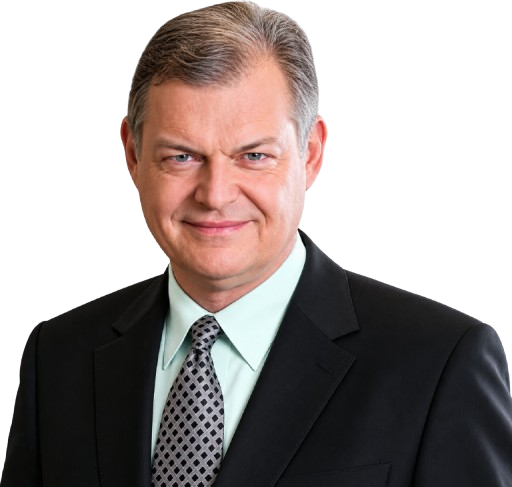
I'm Claude Begle. Five decades taught me that scale and conscience are not opposites — they're the same discipline practised well. Today I work with founders, boards and institutions building ventures that are ambitious, sustainable, and built to outlast their founders.
A world where clean does not mean contaminated.
Where every generation inherits an ecosystem stronger than the one handed to it.
Where sustainability is not a movement, but simply how the world operates.
To replace chemical dependence with technology that makes its own solution, on site, from water.
To prove in the P&L — not the brochure — that responsibility and profitability compound together.
To join the leaders willing to move first — country by country, beginning in India — because they are the ones who move everyone else.
I was born in Switzerland in 1949 and raised on classical studies and one simple belief — that a life well spent is one spent in service. That belief put me on an overland road from Switzerland to India in 1974, then onto the Red Cross frontlines in Beirut and Rhodesia, and eventually into three decades leading global businesses — Nestlé, Philip Morris, TNT, GeoPost/DPD, DHL — across five continents.
I later chaired Swiss Post, Switzerland's second-largest employer, and served in the Swiss Federal Parliament. But the thread running through all of it was never the title. It was the conviction that environmental responsibility and commercial performance are not a trade-off. They are a design problem — and design problems can be solved.
I hold a Master in Law, a Master in International Relations and a PhD in Economics. What I actually bring is pattern recognition from fifty years of building, fixing and scaling things that mattered — and the humility to know there is always more to learn.
Five decades across Europe, Asia, Africa and the Americas taught me how markets actually open — and how they close on the unprepared. I advise founders and boards on entering new geographies without losing what made them work in the first place.
Turning environmental responsibility from a cost centre into a competitive advantage. I help leadership teams build sustainability strategy that holds up commercially — in the P&L, not just on a slide.
From CEO of DHL Germany to Chairman of Swiss Post to founder-led ventures, I've sat on both sides of the boardroom table. I advise executives and boards on governance, succession, and leading through growth and crisis alike.
Building from zero teaches what no advisory role can. I work with founders and mid-market technology leaders on strategy, positioning, and the discipline that carries an idea to an institution.
Four initiatives, one thesis — that green technology, enterprise and stewardship are strongest built together rather than balanced against each other.
The company I founded to remove chemicals from cleaning entirely. Its flagship, the HydroCleaner, produces its disinfecting solution on site from water — no procurement, no transport, no storage, no residue. Now expanding across Switzerland, India and beyond.
Visit Swiss NeWater →An on-site system that replaces a chemical supply chain with water and electricity. A single substitution that resolves a procurement line, a health exposure, an emissions line and a waste stream at the same time.
See the HydroCleaner →Founded on the principle that nature responds the way you treat it. Echo bridges environmental stewardship and practical business action, focusing on prevention — because remediation is only what we do after we have already lost.
Visit the Echo Foundation →A platform for global reflection on sustainability and entrepreneurship, convening leaders across sectors and geographies to work out what a durable economy actually requires.
Visit SymbioSwiss →We spent a century solving the problem of germs by manufacturing, shipping, storing and pouring chemicals — and created a second problem we never priced in. Those chemicals do not disappear. They settle. Into water, into soil, into food chains, into lungs and skin and bloodstreams. We call it hygiene. Nature files it as deposition.
This is not an environmental issue sitting apart from a health issue. It is one issue. The cost of conventional cleaning is paid twice — once at the invoice, and again, years later, in hospitals and in depleted ecosystems. A model that produces both bills cannot honestly be called sustainable living. It is borrowed living.
My instinct — and after fifty years, instinct is largely pattern recognition — is that we will not solve this by using slightly less of the wrong thing. The step that changes the trajectory is to remove the chemical from the equation entirely: generate the cleaning agent on site, from water, at the moment of use. That is what the HydroCleaner does, and why I built Swiss NeWater around it.
What makes it a decision rather than a debate is that it asks no one to choose between conscience and cost. It is cheaper across its working life, safer in the hands that use it, and it leaves nothing behind for the next generation to clean up.
Let me be direct about where you come in. The technology is not the bottleneck — it exists, it works, it is deployed. The bottleneck is the number of leaders willing to be early. Every hospital, hotel, campus, municipality, food plant and factory that adopts this becomes the reference the next hundred were waiting for. That is what thought leadership actually is: not commentary on the future, but the first order placed for it.
I am not asking you to believe in a distant vision. I am asking you to make one procurement decision differently — now, while it is still a choice and not yet a regulation.
A vision of a sustainable world means very little until someone tests it somewhere difficult. So we did not begin where it would be easy. We began in India.
India is the most dynamic country on earth — a continent of climates, languages, industries and traditions living side by side at a scale nowhere else attempts. Its hospitals, hotels, campuses, food plants, temples and municipalities each face the same chemical dependence, under conditions that vary enormously. A solution that works across all of that is not a pilot. It is a proof.
India also deserves it. A civilisation that has thought about the relationship between people and nature for thousands of years should not be asked to accept the residue of a model it did not design. Its forever-living deserves technology built for forever.
So we started by joining hands with Indian leaders — founders, institutions, industry and public bodies who were not waiting for permission to move. What they build here does not stay here. Every deployment across India becomes the evidence that persuades a leader in Europe, in Africa, in the Americas. That is how a global standard actually forms: not by declaration from the top, but by proof from the most demanding ground upward.
This is why I say the future is not something we wait for. It is a set of decisions, made by people who agreed to be early, in the places that mattered most.
Whether you're a founder navigating your next stage of growth, an investor evaluating sustainable ventures, a board seeking seasoned governance perspective, or an organisation ready to move away from chemical dependence — I bring fifty years of hard-won experience, and I am genuinely curious to hear what you are building. We started in India. Wherever you are, there is a place for you in what comes next.